

a Daily Commute Onto Fort Bragg?
Choosing the right vehicle for your daily commute onto Fort Bragg is a decision that impacts your wallet, your schedule, and your peace of mind. Every day, thousands of service members and civilian personnel navigate Fayetteville traffic, wait at access control points, and search for parking in a sprawling, busy environment. Your daily driver needs to be more than just transportation; it must be a reliable partner in your demanding routine. An economical engine can save you a significant amount on fuel costs over a year, while a comfortable interior makes the stop-and-go traffic on the All American Expressway more bearable. Whether you are a new recruit financing your first car or an established family looking for a versatile vehicle, understanding the unique demands of a Fort Bragg commute is the first step toward making an intelligent and practical choice that serves you well every single day.
Finding that perfect balance of efficiency, reliability, and practicality is our specialty. We understand that your vehicle needs to work as hard as you do, getting you to your duty station on time without fail. A dependable car frees you from the stress of unexpected breakdowns and costly repairs, allowing you to focus on your mission. Our team is dedicated to helping you explore options that fit not only your commute but also your budget and lifestyle, ensuring your next vehicle is an asset, not a liability.
Key Factors for Your Fort Bragg Commuter Vehicle
The daily drive to Fort Bragg presents a unique set of challenges that should directly influence your choice of vehicle. It is not just about getting from point A to point B; it is about doing so efficiently, reliably, and safely, day in and day out. Before you even begin looking at specific makes and models in our used inventory, consider these critical factors that will shape your driving experience in and around Cumberland County.
-
Fuel Economy: With gas prices always fluctuating, fuel efficiency is paramount. A long commute from areas like Sanford or Hope Mills can add up quickly. A vehicle with a high MPG rating will save you a considerable amount of money over the life of your loan. This is often the single most important financial factor for a daily driver.
-
Unquestionable Reliability: For a service member, punctuality is not optional. You cannot afford to be late for formation because your car would not start. A reliable vehicle with a solid maintenance history minimizes the risk of unexpected breakdowns and the stress that comes with them. This peace of mind is priceless.
-
Maneuverability and Size: Parking on Fort Bragg can be a challenge, with lots filling up quickly and spaces often being tight. A smaller, more maneuverable vehicle like a compact sedan or crossover can make navigating crowded parking areas significantly easier. It also helps when dealing with the unique Fayetteville traffic patterns.
-
Versatility for Military Life: Your car is not just for commuting. It is for weekend trips, grocery runs, and potentially, a Permanent Change of Station (PCS) move across the country. A vehicle with flexible cargo space can adapt to the changing needs of military life, from hauling gear to accommodating a growing family.
Comparing Vehicle Types for the Fort Bragg Driver
With those key factors in mind, let's explore how different vehicle types stack up for the average Fort Bragg commuter. There is no single "best" option, as the ideal choice depends on your personal priorities, family size, and budget. For more details on this choice, read our guide on sedan versus crossover for a daily commute.
The Efficient Sedan
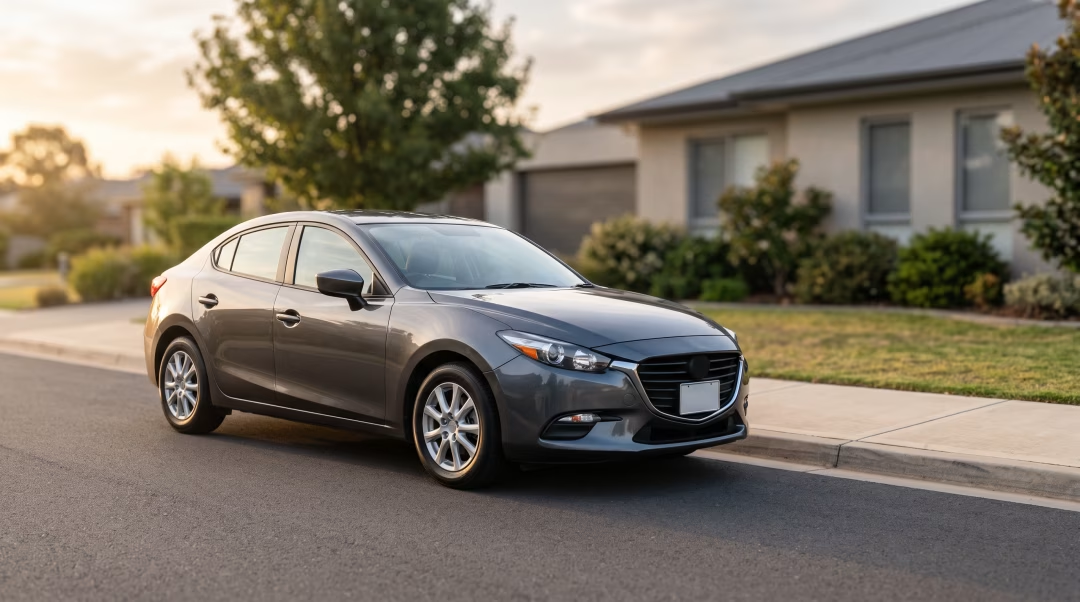
For the solo commuter or small family focused purely on efficiency and affordability, the sedan is often the top choice. Typically, sedans offer the best fuel economy of any vehicle class, translating directly into lower weekly gas costs. They are easy to park, handle well in city traffic, and generally have lower initial purchase prices and insurance rates. While they lack the cargo space of an SUV, a modern sedan offers a comfortable, quiet ride perfect for decompressing after a long day.
The Versatile SUV and Crossover
SUVs and crossovers have become incredibly popular for a reason: they offer a perfect blend of practicality and comfort. With ample cargo space, a higher driving position for better visibility, and available All-Wheel Drive (AWD), they are ready for anything from a trip to the Commissary to a weekend getaway to the mountains. While their fuel economy might be slightly lower than a sedan's, many modern compact and mid-size SUVs offer impressive MPG ratings, giving you the best of both worlds. They are an excellent choice for military families or anyone who needs their vehicle to serve multiple roles.
The Capable Pickup Truck
A pickup truck might be the ideal solution for service members who need rugged utility. Whether you are hauling training gear, helping a friend move, or tackling a home improvement project on the weekend, the utility of a truck bed is unmatched. While historically known for poor fuel economy, many modern trucks with smaller engines offer respectable mileage that can work for a daily commute. However, parking a full-size truck on base can be more challenging, so it is a trade-off between utility and convenience. First-time truck buyers should understand the different costs associated with ownership, and we can help you with what you should know before financing one.
Making the Right Financial Decision
Once you have narrowed down the vehicle type, the next step is securing financing. As a Buy Here Pay Here dealership, we specialize in providing practical financing solutions, especially for those who may have trouble getting approved through traditional lenders. We understand the unique financial situations of military personnel and work with you to create a payment plan that fits your budget. We invite you to learn more about what Buy Here Pay Here is and explore our financing area to see how we can help you get behind the wheel of the perfect commuter vehicle for your needs.
Frequently Asked Questions
How important is fuel efficiency for a commute to Fort Bragg?
Fuel efficiency is extremely important. Depending on where you live in the Fayetteville area, your daily round trip could easily be 30 miles or more. A vehicle that gets 30 MPG versus one that gets 20 MPG can save you hundreds of dollars in fuel costs per year. This savings can go directly toward your payment, insurance, or other expenses.
Do I need an all-wheel drive (AWD) or 4x4 vehicle for driving in Fayetteville?
While North Carolina winters are generally mild, we do occasionally get ice or a dusting of snow. For most daily commutes, a standard front-wheel drive vehicle with good tires is perfectly adequate. However, if you enjoy weekend trips to the mountains or simply want extra confidence in wet conditions, an AWD vehicle can be a great choice.
Is a larger vehicle like a truck or SUV difficult to park on Fort Bragg?
It can be. Parking lots near barracks, offices, and motor pools can be very crowded, and spots are often designed for standard-sized cars. While not impossible, parking a full-size truck or large SUV will require more time and care. A compact SUV or sedan will be noticeably easier to park on a daily basis.
What type of vehicle is best for a service member who might have to PCS?
A mid-size SUV or a crossover is often an ideal choice for a service member facing a potential PCS move. These vehicles offer a great combination of reliable and efficient daily driving with the cargo capacity needed to transport personal belongings, family members, and pets across the country. Their versatility makes them adaptable to almost any new duty station.
How does my choice of vehicle affect my insurance costs as a commuter?
Your vehicle choice significantly impacts your insurance premium. Generally, a practical four-door sedan will be less expensive to insure than a large truck or a sports car. Insurance companies consider factors like the vehicle's value, repair costs, safety ratings, and theft rates. You can learn more about requirements from our page on what insurance coverage is required.
