

Patterns Before Choosing a Commuter Vehicle
Choosing the right commuter vehicle in Fayetteville, North Carolina, is about more than just finding a car you like; it is about finding a car that fits the unique rhythm of the city. With the significant presence of Fort Bragg, bustling commercial corridors like Skibo Road, and expanding highways such as the I-295 outer loop, your daily drive can vary dramatically. One day might be a smooth cruise, while the next could involve significant stop-and-go traffic. Understanding these local traffic patterns is the first step toward selecting a pre-owned vehicle that offers the right blend of fuel efficiency, comfort, and reliability. The ideal car for a long highway commute from Sanford might not be the best choice for navigating gate traffic near the base. This guide will help you analyze your driving needs so you can find a vehicle that saves you money on fuel and reduces stress behind the wheel.
Navigating our local roads requires a vehicle that can handle both the open road and dense city congestion with ease. The right car will not only make your commute more pleasant but will also be more economical in the long run. By considering factors like engine size, transmission type, and overall comfort, you can make an informed decision that aligns perfectly with your daily driving reality in Cumberland County. Explore our extensive used inventory to find a vehicle equipped to handle everything Fayetteville roads have to offer.
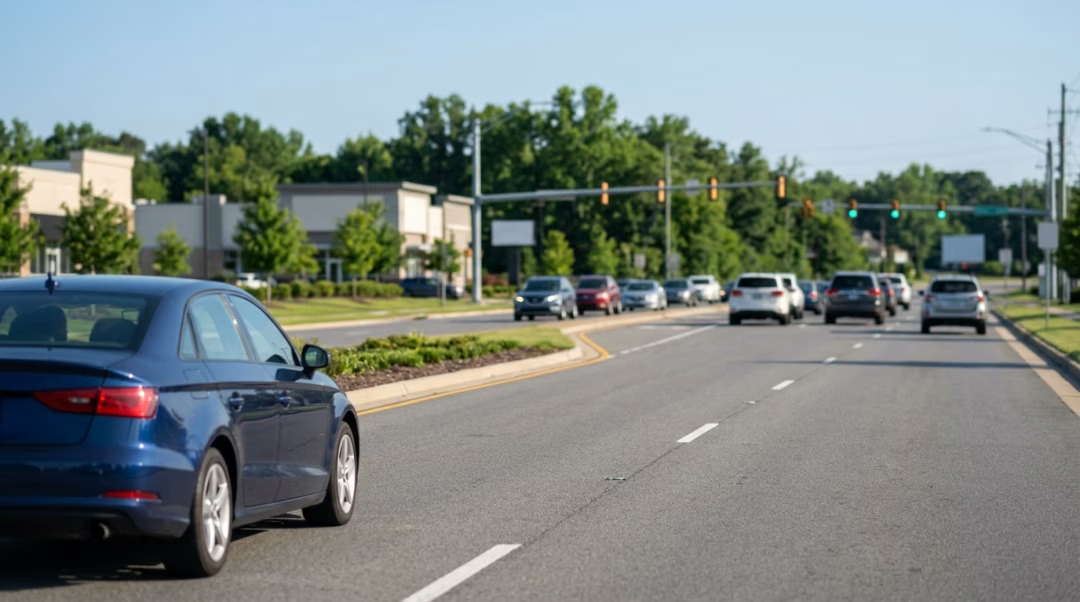
A Comprehensive Guide to Fayetteville's Commuting Landscape
Fayetteville is a dynamic and growing city, and its traffic patterns reflect that energy. For residents, especially those commuting daily for work, school, or military duties, the vehicle you drive has a massive impact on your day. A commute filled with constant braking and accelerating puts different demands on a car than a steady 65 mph highway drive. Understanding this distinction is key to making a smart purchase. At our dealership, we want to empower you with local knowledge so you can choose a reliable vehicle that truly meets your needs. If you have questions about financing a vehicle that fits your commute, our team is always ready to help. You can learn more about our simple process on our page explaining what Buy Here Pay Here is all about.
The Major Traffic Corridors of Cumberland County
Every city has its main arteries, and Fayetteville is no exception. Knowing what to expect on these roads can help you decide if you need a nimble sedan or a more commanding crossover.
- Skibo Road and Raeford Road: These are the commercial hearts of Fayetteville. Lined with shopping centers, restaurants, and businesses, they are characterized by numerous traffic lights and frequent stops. During peak shopping hours and weekends, traffic can become very congested. A vehicle with a smooth automatic transmission and good low-speed maneuverability is a major advantage here.
- Bragg Boulevard and Ramsey Street: As primary routes leading toward Fort Bragg and northern parts of the county, these roads see heavy commuter traffic. They feature a mix of steady driving and stoplights, especially during morning and evening rush hours. A comfortable interior and a good audio system can make these drives much more pleasant.
- All American Freeway and I-295 Outer Loop: These are your primary highway routes. The All American provides direct access to Fort Bragg, while I-295 is increasingly used by commuters from Hope Mills, Raeford, and Sanford to bypass city congestion. For drivers who spend most of their time here, fuel economy at highway speeds is a top priority. A vehicle that is stable and quiet on the highway will provide the best experience.
The Fort Bragg Effect on Daily Traffic
It is impossible to discuss Fayetteville traffic without focusing on Fort Bragg. As the largest military installation in the United States by population, its daily operations dictate the flow of traffic for a significant portion of the county. Morning physical training (PT) schedules, shift changes, and the general morning influx create predictable, yet intense, periods of congestion. The hours between 06:00 and 09:00 see the heaviest traffic heading onto the base, with the afternoon exodus occurring between 16:00 and 18:00. Roads like the All American Freeway, Murchison Road, and Reilly Road can become parking lots during these times. A vehicle with excellent climate control is a must for sitting in summer traffic, and one with a low fuel consumption at idle will save you money. For service members, understanding what a new recruit should know before financing a car is crucial for making a sound financial decision.
Matching the Right Vehicle to Your Fayetteville Drive
With this understanding of local traffic, you can start to narrow down your vehicle choice. The goal is to find the perfect balance of efficiency, comfort, and utility for your specific route.
The Fuel-Efficient Sedan: If your commute primarily involves I-295 or you are traveling from an outlying town like Dunn or Lumberton, a sedan is often the perfect choice. Models from Honda, Toyota, and Hyundai are renowned for their excellent highway MPG, reliability, and lower overall maintenance costs. Their smaller size also makes them easy to park and navigate in more crowded areas like downtown Fayetteville. See our article comparing a sedan versus a crossover for more details.
The Versatile Crossover or Small SUV: For the driver whose day includes a bit of everything—a commute down Bragg Boulevard, a trip to the grocery store on Raeford Road, and picking up kids from school—a crossover offers unbeatable versatility. You get a higher driving position for better visibility in traffic, more cargo space than a sedan, and many models still offer competitive fuel economy. They provide a great compromise for families who need flexibility.
The Capable Truck or Full-Size SUV: While perhaps not the most fuel-efficient choice for city-centric, stop-and-go driving, a truck or large SUV is essential for many in our community. If your job requires hauling tools and equipment or if you have a large family and need the extra seating, the utility is non-negotiable. When choosing one for commuting, look for models with features that improve efficiency, such as cylinder deactivation, and be prepared to budget more for fuel. Before you buy, it is helpful to understand how to estimate real-world fuel costs.
Budgeting for Your Commuter Car
Your vehicle choice has a direct impact on your wallet that goes beyond the monthly payment. A car that sits in traffic a lot will use more fuel and may require more frequent brake service. A long highway commute will put more miles on the vehicle, affecting its value when it is time to trade it in. It is important to consider the total cost of ownership. Our financing team can help you understand all the factors. We make it easy to get pre-qualified online, so you can shop with a clear budget in mind. If you are thinking of upgrading your current ride, you can also value your trade on our website to see how it can help with your down payment.
Frequently Asked Questions About Commuter Vehicles in Fayetteville
What type of vehicle is the most fuel-efficient for Fayetteville's mix of traffic?
For most drivers navigating Fayetteville's combination of city streets and highways, a compact to mid-size sedan typically offers the best overall fuel economy. Hybrid models are even better, as they excel in stop-and-go conditions by using electric power at low speeds. However, many modern crossovers also provide excellent MPG, giving you a good balance of efficiency and utility.
How does constant stop-and-go traffic affect a car's mechanical components?
Stop-and-go driving is harder on a vehicle than steady highway cruising. It puts significant wear on your brakes, requiring more frequent pad and rotor replacement. It also causes the engine and transmission to work harder and generate more heat, which can accelerate fluid breakdown. Regular maintenance is crucial for a vehicle used primarily in city traffic.
Are there any specific times I should absolutely avoid driving near Fort Bragg?
Yes. The most congested times are weekdays from approximately 06:00 to 09:00 in the morning as personnel report for duty, and again from 16:00 to 18:00 in the evening. It is also wise to be aware of division or brigade-wide runs, which can temporarily close major roads around the base in the early morning.
Is a larger SUV a practical choice for a daily commute in Fayetteville?
It can be, depending on your needs. If you require the extra space for family or work, the utility can outweigh the lower fuel economy. The higher seating position can also improve visibility in heavy traffic. However, if you do not need the extra space, a smaller vehicle will be more economical to operate and easier to park in crowded areas like the Cross Creek Mall.
With traffic being so unpredictable, how can I accurately budget for my fuel costs?
A good strategy is to track your fuel consumption for a few weeks to get a baseline average. Use an app or a simple notebook. Then, add a 10-15% buffer to your monthly fuel budget to account for days with heavier-than-usual traffic, detours, or rising gas prices. Choosing a fuel-efficient vehicle is the most effective way to keep this cost predictable.
