

Buyers Should Approach Vehicle Reliability
Your Guide to Finding a Dependable Vehicle for Country Living
For residents of rural Cumberland County, a vehicle is not just a convenience; it is a lifeline. Unlike city driving, your daily routine likely involves longer commutes on roads that can be less forgiving, with fewer public transportation options to fall back on. This reality places a much higher premium on vehicle reliability. A breakdown is more than a simple inconvenience; it can mean lost time, significant expense, and a major disruption to your work and family life. Understanding how to evaluate a used vehicle for long-term dependability is the single most important step in the car buying process. It is about choosing a car, truck, or SUV that can handle the demands of rural roads, long distances, and the essential role it plays in your everyday activities, ensuring you get where you need to go safely and without worry.
Our Commitment to Your Peace of Mind
We recognize that the criteria for a great vehicle change when you live outside the city limits. That is why we focus on stocking a used inventory with vehicles known for their durability and performance. Our team is dedicated to helping you understand the key factors that contribute to a car's longevity, from its maintenance history to its mechanical condition. We believe in transparent financing and straightforward communication, helping you make a choice that fits both your lifestyle and your budget for years to come.
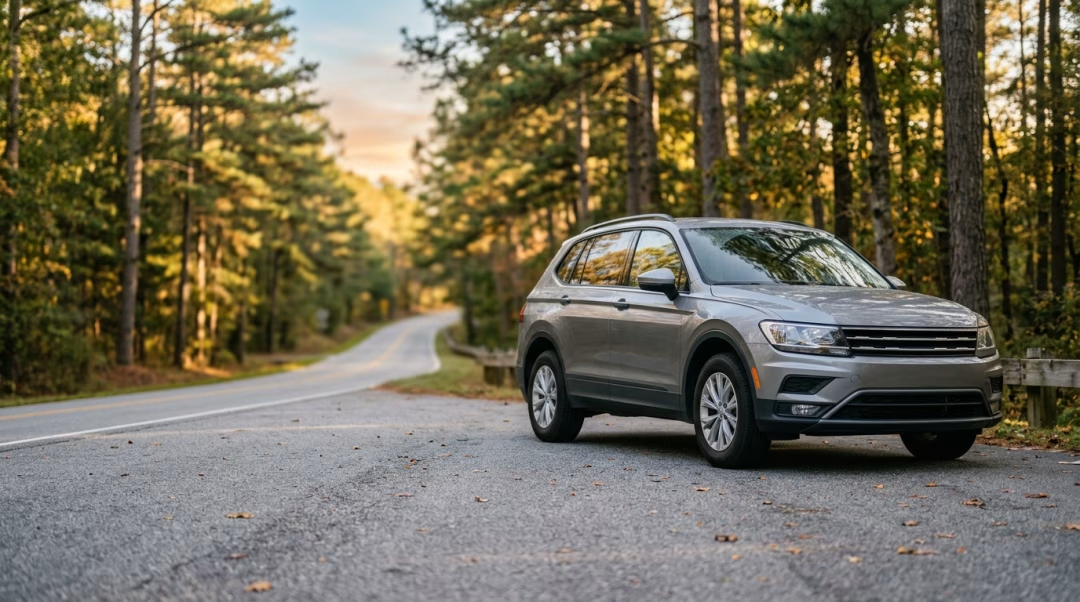
A Deeper Dive into Vehicle Reliability for Rural Drivers
Life in the more remote parts of Cumberland County has a unique rhythm, and your transportation needs to match it. A reliable vehicle is the key that unlocks access to work in Fayetteville, school, groceries, and medical appointments. When your nearest neighbor is a mile away and the closest mechanic is a town over, you cannot afford to take chances with a vehicle that might leave you stranded. Let us explore the specific factors that rural buyers should prioritize when searching for their next car.
The Unique Demands of Rural Cumberland County Driving
The daily drive for a rural resident is fundamentally different from a short city commute. Understanding these differences is crucial to selecting a vehicle that will not just survive, but thrive in this environment.
- Increased Mileage Accumulation: Longer distances to work, shopping, and community events mean you will put more miles on your vehicle, faster. A car that is built to last through high mileage is not a luxury; it is a necessity. This makes routine maintenance and a solid service history even more critical.
- Varied Road Conditions: While many main roads are well-maintained, rural life often involves travel on gravel, dirt, or poorly paved surfaces. This puts extra stress on a vehicle's suspension, tires, and chassis. A car with a robust build quality is better equipped to handle these challenges without premature wear and tear.
- Distance from Service Centers: If a check engine light comes on, you cannot always pull into a nearby dealership. Being miles from a trusted mechanic means a small problem can become a major hassle. Prioritizing vehicles with a reputation for fewer mechanical issues can save you significant time and towing expenses.
Key Mechanical Components to Scrutinize
When you inspect a potential vehicle, you are looking for more than just a shiny exterior. You are investigating its core health. A thorough inspection, both personally and by a trusted mechanic if possible, should be a non-negotiable part of your process. Before you even schedule a test drive, you can learn a lot by looking closely at the vehicle's essential systems.
Start with the engine and transmission, the heart and soul of any car. Check for any visible leaks, cracked hoses, or frayed belts under the hood. Ask about the vehicle's service history, paying close attention to regular oil changes and transmission fluid services. A well-maintained powertrain is the number one indicator of a long and healthy vehicle life. Next, inspect the suspension and tires. Uneven tire wear can be a sign of alignment or suspension problems, which can be costly to fix and lead to an uncomfortable, unsafe ride on uneven country roads. Finally, test all the electronics, from the headlights and power windows to the air conditioning. While not as critical as the engine, failing electronics can be frustrating and hint at deeper electrical system issues.
Matching the Right Vehicle Type to Your Rural Lifestyle
The ideal vehicle for you depends entirely on your specific needs. There is no one-size-fits-all answer, but considering your daily routine will lead you to the right choice.
- Sedans: Perfect for the long-distance commuter. Sedans typically offer the best fuel economy, which can lead to significant savings over the course of a year if you are driving into Fayetteville or Sanford every day. They provide a comfortable ride on paved roads and are often less expensive to purchase and maintain.
- SUVs and Crossovers: The versatile choice for families and those needing more flexibility. SUVs offer more cargo space for groceries or gear and often have available all-wheel drive (AWD) for better traction on wet or unpaved roads. Their higher ground clearance can also be an advantage on rougher terrain.
- Trucks: The essential tool for many rural households. If your life involves hauling equipment, towing a trailer, or navigating truly tough terrain, a pickup truck is often the only option that will do. They are built for durability and utility above all else.
Budgeting for Total Cost of Ownership
A smart vehicle purchase goes beyond the sticker price and the down payment. True affordability is measured by the total cost of ownership over the life of your loan. This includes the monthly payment, insurance, fuel, and, most importantly for a used vehicle, a budget for maintenance and potential repairs. Understanding your financing options is a key part of this process. At our dealership, we offer straightforward Buy Here Pay Here financing, which can be a great solution for buyers with varied credit histories. We work with you to establish a payment plan that fits your income and budget, ensuring your vehicle remains an asset, not a financial burden. Before you apply, you can even value your trade online to see how it can impact your down payment and overall cost.
Our approach is to provide clarity. For instance, we can explain exactly how a finance charge is calculated so you have a complete picture of your investment. By planning for these costs upfront, you can enjoy your vehicle with the confidence that you have made a sound financial decision for the long haul.
Frequently Asked Questions About Vehicle Reliability
Is a higher-mileage vehicle always less reliable?
Not necessarily. A well-maintained vehicle with 100,000 highway miles can often be more reliable than a poorly maintained vehicle with 60,000 city miles. The key is the vehicle's service history. Consistent oil changes, timely repairs, and care from the previous owner are far more important indicators of future reliability than the number on the odometer.
What is more important for rural driving: all-wheel drive or good tires?
While all-wheel drive (AWD) can provide extra traction in slippery conditions, a good set of tires is arguably more critical for everyday safety. Your tires are the only part of the vehicle that touches the road. Quality all-season or all-terrain tires with deep tread will do more for your braking, steering, and handling on wet or gravel roads than AWD with worn-out tires.
How does a vehicle history report help determine reliability?
A vehicle history report, such as a CarFax or AutoCheck, provides a valuable look into a car's past. It can show reported accidents, title issues (like salvage or flood damage), previous owners, and sometimes even service records. This information helps you spot potential red flags that could lead to reliability problems down the road, allowing you to make a more informed decision.
Are trucks and SUVs automatically more dependable than sedans for country roads?
Trucks and SUVs are built with more robust frames and suspension systems, which can make them better suited for rougher roads. However, many sedans from reputable brands are known for their exceptional long-term reliability and lower maintenance costs. The most dependable vehicle is one that has been well-engineered and properly cared for, regardless of its body style.
How can I budget for unexpected repairs on a used car?
A great strategy is to create a dedicated car maintenance fund. After calculating your monthly payment, insurance, and fuel, try to set aside an additional amount, perhaps $50 to $100 per month, into a separate savings account. This creates a financial cushion, so when a routine repair like new brakes or a surprise issue arises, you can handle it without financial stress.
