

Actually Need in Your Next Vehicle?
Choosing your next used vehicle involves many decisions, but one of the most fundamental is determining the right number of seats. It is a question that goes beyond a simple headcount. You are balancing your daily commute against weekend adventures, carpool duties against solo drives, and current needs against future possibilities. Do you opt for a nimble five-seater that is perfect for city driving and fuel efficiency, or do you invest in a spacious seven or eight-seater for those "just in case" moments with extended family and friends? This decision impacts everything from your budget and fuel costs to your daily driving experience. Thinking through your lifestyle is the first step toward finding a vehicle that does not just fit your passengers, but truly fits your life. Let us help you explore the options and find the perfect match for your journey ahead.
Now that you have seen some of the reliable vehicles we offer, let us dive deeper into the process of choosing the right seating capacity. The perfect vehicle is not just about the price or the model, it is about how it integrates into your routine. A car that is too small can lead to constant frustration, while one that is too large can be inefficient and difficult to maneuver. Our goal is to provide you with the insights needed to make a confident and practical choice.
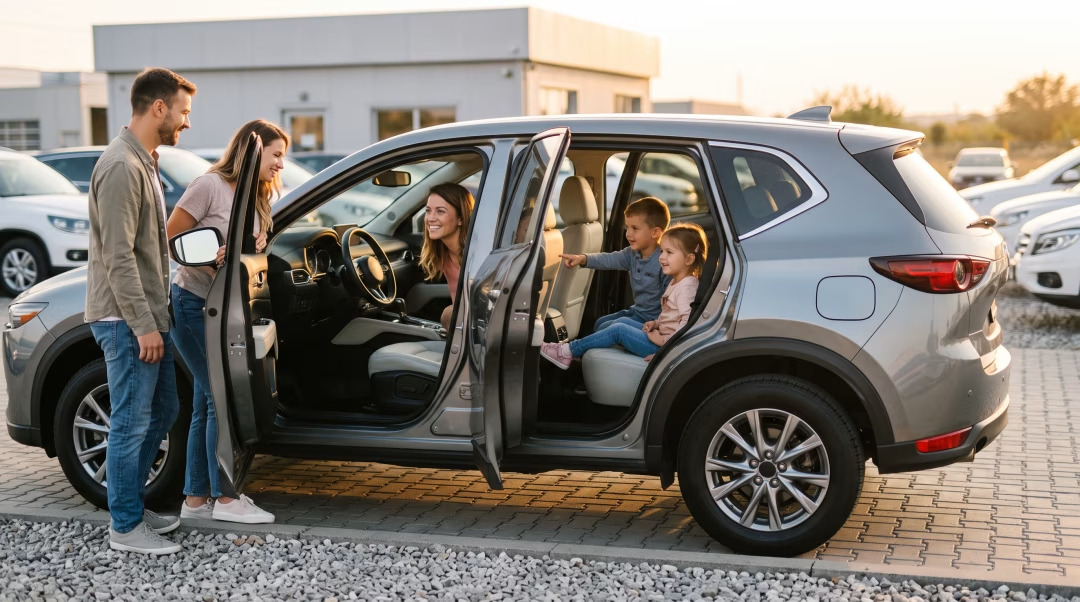
A Comprehensive Guide to Choosing Your Vehicle's Seating Capacity
The number on the spec sheet that says "seating for 5" or "seating for 8" seems straightforward, but the reality of how you use those seats is far more nuanced. Many drivers purchase a vehicle with a third row thinking they will use it constantly, only to find it stays folded down 99 percent of the time, consuming cargo space and adding weight that reduces fuel economy. Conversely, a growing family might underestimate their need for extra room, leading to cramped road trips and logistical challenges. The key is to perform an honest assessment of your real-world needs, both now and in the foreseeable future. Before browsing our used inventory, take a moment to consider the factors that will truly influence your decision.
Analyzing Your Daily and Weekly Routine
Start by thinking about your most common trips. For many, this is the daily commute. Are you typically driving alone, or with one other passenger? If so, a spacious five-seat sedan or a compact crossover offers more than enough room and will likely provide better mileage and be easier to park in busy areas. Consider your weekly errands as well. Do you handle the school run or carpool for kids' activities? If you are regularly transporting more than two or three children, plus their backpacks and sports equipment, the math starts to change. The convenience of a third row, even for occasional use, might outweigh the benefits of a smaller vehicle. For many households, a five-seater is the sweet spot, comfortably handling daily tasks without the added bulk and cost of a larger SUV or minivan. You can learn more about the different options in our research pages.
The Great Third-Row Debate: When Do You Need More Than Five Seats?
The leap from a five-seat vehicle to one with a third row is significant. It opens up a new level of versatility but also comes with trade-offs. This is where you need to separate the "nice-to-have" from the "need-to-have."
- Growing Families: If you have three or more children, especially if they are still in car seats, a third row can be a necessity for both space and safety. It allows for better separation and comfort on longer journeys.
- Frequent Guests: Do you often drive with grandparents, other family members, or your kids' friends? If you regularly find yourself wishing you had one or two extra spots, a seven or eight-seater is a logical upgrade.
- Carpool Commitments: Being the designated driver for work, school, or community events means you need the capacity to handle a group. A larger vehicle makes these trips possible and more comfortable for everyone involved.
If these scenarios only happen once or twice a year, it may be more practical to stick with a five-seater and arrange alternate transportation for those rare occasions. However, if they are a regular part of your life, the investment in more seats will pay off in convenience and reduced stress. To see how a larger vehicle might fit into your budget, you can always get pre-qualified for financing with us.
Cargo Space and Versatility: It Is Not Just About People
Seating capacity is directly tied to cargo capacity. A common mistake is overlooking how much storage space is available when all the seats are in use. In many three-row SUVs, the cargo area behind the third row is surprisingly small, barely enough for a load of groceries, let alone luggage for a family vacation. This is a primary reason why many families opt for a minivan, as they often provide substantial cargo room even with a full house of passengers. As you explore options, consider how you will use the space. Do you have large dogs? Do you play sports with bulky equipment like hockey bags or golf clubs? Are you a DIY enthusiast who frequently hauls supplies from the hardware store? Look for vehicles with split-folding rear seats (e.g., 60/40 or 40/20/40 configurations) that allow you to customize the layout for a mix of passengers and cargo. Making the right choice here is just as important as the mechanical soundness of the vehicle, which is why we always recommend you learn what to check under the hood before buying.
Future-Proofing Your Decision
A vehicle is a long-term purchase. The car that is perfect for you today might not be in three to five years. Think about your life trajectory. Are you planning on having more children? Do you anticipate your kids getting involved in more activities that require hauling gear and friends? Perhaps you are nearing retirement and plan to travel more with friends. Buying a vehicle with a little extra capacity than you need right now can be a smart move, saving you from having to trade in your vehicle sooner than planned. On the other hand, if your kids are older and will soon be driving themselves, you might be able to downsize. Considering these future scenarios will help you select a vehicle that can adapt as your life changes. Our team is always here to discuss your long-term needs when you schedule a test drive.
Is a third row in an SUV actually comfortable for adults?
Comfort in a third row varies dramatically by vehicle. In most mid-size crossovers, the third row is best suited for children or for short trips for adults due to limited legroom and headroom. Full-size SUVs and minivans, however, often provide third-row seating that can comfortably accommodate adults for longer journeys, with easier access and more amenities.
Do I lose all my cargo space when the third-row seats are up?
In many three-row SUVs, using the third row significantly reduces cargo space. It is a critical factor to consider if you need to transport both a full load of passengers and their gear simultaneously. Minivans and larger, extended-wheelbase SUVs generally offer the best balance, providing usable cargo space even when every seat is occupied.
What is the real difference between a 7-seater and an 8-seater?
The primary difference lies in the second-row configuration. A 7-seater typically has two "captain's chairs" in the second row, offering more comfort and an easy pass-through to the third row. An 8-seater usually has a three-person bench seat in the second row. The choice depends on whether you prioritize maximum passenger count or second-row comfort and accessibility.
Are two-row SUVs significantly better for fuel economy?
Generally, yes. Two-row SUVs are typically lighter and more compact than their three-row counterparts, which translates to better fuel efficiency. Without the extra weight and size required to accommodate a third row, they can be more economical for daily driving, especially if you rarely need the extra seating.
How does the number of seats affect my auto insurance rates?
Insurance rates are based on many factors, but vehicle size and type play a role. Larger vehicles like minivans and three-row SUVs may sometimes have slightly higher premiums because they can carry more passengers, which increases the potential liability in an accident. However, their safety ratings and repair costs are often more significant factors in determining the final rate.
